
Sushi rice is the heart of great sushi. Whether you are preparing homemade sushi rolls, fresh nigiri, colorful sushi bowls, or simple Japanese rice dishes, the quality of your rice can make all the difference. Perfect sushi rice should be tender, slightly sticky, glossy, and delicately seasoned with a balanced combination of rice vinegar, sugar, and salt.
The good news is that you do not need to visit a Japanese restaurant to enjoy delicious sushi rice. With the right ingredients, a little patience, and a few simple techniques, you can prepare authentic Japanese-style sushi rice in your own kitchen.
In this guide, you will learn how to choose the best rice, measure the ingredients, cook the grains properly, prepare the traditional seasoning, and combine everything for restaurant-quality results. You will also discover useful storage tips, common mistakes to avoid, and creative ways to use leftover sushi rice.
What Is Sushi Rice?
Sushi rice, commonly called shari or sumeshi in Japanese culinary contexts, is short-grain Japanese rice cooked until tender and then seasoned with a mixture of rice vinegar, sugar, and salt.
Unlike ordinary steamed rice, sushi rice has a distinctive balance of flavor and texture. The grains hold together when shaped but should not become mushy or form one solid mass.
Sushi rice is used in many Japanese dishes, including:
- Maki sushi: Rice and fillings rolled in dried seaweed.
- Nigiri sushi: Hand-shaped rice topped with fish, seafood, or other ingredients.
- Temaki: Hand-rolled sushi cones filled with rice and assorted fillings.
- Chirashi sushi: A bowl of seasoned rice topped with fish, vegetables, and other ingredients.
- Sushi bowls: Rice served with toppings such as avocado, cucumber, cooked shrimp, or tofu.
The secret is not simply cooking rice. It is creating the right texture and seasoning so that every grain contributes to the finished dish.
Sushi Rice Recipe at a Glance
| Recipe detail | Information |
|---|---|
| Preparation time | 10–15 minutes |
| Soaking time | 20–30 minutes |
| Cooking time | 15–20 minutes |
| Resting time | 10 minutes |
| Total time | Approximately 55–70 minutes |
| Servings | 4–6, depending on portion size |
| Cuisine | Japanese |
| Cooking method | Stovetop |
| Difficulty | Easy |
| Main ingredients | Japanese short-grain rice, rice vinegar, sugar, and salt |
Ingredients for Homemade Sushi Rice
This recipe makes approximately 4–6 modest portions of sushi rice, depending on how you serve it.
| Ingredient | Amount | Purpose |
|---|---|---|
| Japanese short-grain rice | 2 cups (about 360–400 g) | Creates the signature sticky texture |
| Water | About 2 cups, adjusted for the rice and cooking method | Cooks the rice evenly |
| Rice vinegar | 4 tablespoons | Adds gentle acidity |
| Granulated sugar | 2 tablespoons | Balances the vinegar |
| Fine salt | 1 teaspoon | Enhances the overall flavor |
Important: Use Japanese-style short-grain rice labeled for sushi when possible. The amount of water can vary with the rice brand, soaking time, and cooking equipment, so follow the package directions when they differ from the general method below.
Choosing the Right Rice
Japanese short-grain rice is the best choice because it develops the moisture and stickiness needed for sushi. It is different from long-grain rice, which tends to remain separate and fluffy.
Medium-grain rice can work in some situations, but jasmine and basmati rice are generally poor substitutes for traditional sushi because their texture and starch characteristics are different.
For the best results, choose fresh rice from a reliable supplier and measure it before rinsing.
How to Make Sushi Rice Step by Step
Step 1: Measure and Rinse the Rice
Place the rice in a large bowl and cover it with cool water. Gently swirl the grains with your hand, then pour away the cloudy water.
Repeat the process several times until the water becomes much clearer. It does not need to be perfectly transparent.
Rinsing removes excess surface starch, helping prevent the cooked rice from becoming overly gummy. Handle the grains gently because aggressive rubbing can break them.
Kitchen tip: Drain the rice thoroughly after rinsing. Too much water clinging to the grains can affect the final cooking ratio.
Step 2: Soak the Rice
After rinsing, cover the rice with fresh water and let it soak for approximately 20–30 minutes. Drain it before cooking.
Soaking allows moisture to enter the grains more evenly. This helps the outside and center cook at a similar rate, producing a tender texture.
If the rice package recommends a different soaking method, follow those instructions. Some modern rice cookers and rice varieties require less preparation.
Step 3: Cook the Rice
Transfer the drained rice to a saucepan with a tight-fitting lid. Add the measured cooking water according to the rice package instructions.
Bring the water to a gentle boil over medium heat. Once it begins boiling, reduce the heat to low and cover the saucepan.
Cook for approximately 12–15 minutes, or according to the rice package directions. Avoid lifting the lid repeatedly because escaping steam can interfere with even cooking.
When the cooking time is complete, turn off the heat and leave the saucepan covered for another 10 minutes. This resting period helps the moisture distribute throughout the rice.
How to recognize properly cooked rice: The grains should be tender, slightly glossy, and able to hold together when gently pressed. There should be no hard, chalky center.
Step 4: Prepare the Sushi Vinegar Seasoning
While the rice cooks, combine the rice vinegar, sugar, and salt in a small saucepan or heat-safe bowl.
Warm the mixture gently, stirring until the sugar and salt dissolve. Do not boil it vigorously. If you use a microwave, heat it in short intervals and stir between each interval.
Allow the seasoning to cool slightly before adding it to the rice.
The seasoning should taste pleasantly tangy, mildly sweet, and lightly salty. If you prefer a more subtle flavor, begin with a little less seasoning and adjust carefully.
Step 5: Transfer the Rice to a Wide Bowl
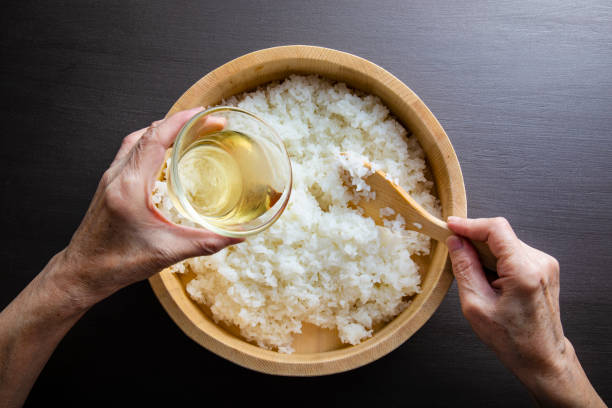
Once the rice has rested, transfer it to a wide, shallow bowl. A traditional wooden sushi tub, called a hangiri, is useful but not essential.
A wide container allows excess steam to escape and makes it easier to distribute the seasoning without crushing the grains.
Avoid stirring the rice aggressively with a spoon. Sushi rice needs careful handling to preserve its shape and texture.
Step 6: Season the Rice
Pour the vinegar mixture evenly over the warm rice. Using a rice paddle or a broad spatula, cut through the rice with gentle slicing motions.
Turn the rice over between cuts so that the seasoning reaches the grains throughout the bowl. Imagine dividing the rice into small sections rather than stirring it in circles.
Continue until the seasoning is evenly distributed. If possible, fan the rice gently while mixing. This helps release excess steam and gives the finished rice an attractive sheen.
Do not press or mash the rice. The goal is to season the grains while keeping them intact.
Step 7: Cool the Rice Before Using It
Let the seasoned rice cool until it reaches approximately room temperature. Cover it with a clean, slightly damp cloth to prevent the surface from drying out.
Avoid placing freshly seasoned rice directly in the refrigerator if you intend to make sushi immediately. Refrigeration can make the rice firm and less pleasant to shape.
Once cooled, the rice is ready for sushi rolls, nigiri, sushi bowls, and other Japanese-inspired meals.
What Makes Perfect Sushi Rice?
Great sushi rice depends on several small details working together.
| Key factor | What to do | Why it matters |
|---|---|---|
| Rice variety | Choose Japanese short-grain rice | Provides the desired sticky texture |
| Rinsing | Wash until the water is clearer | Removes excess surface starch |
| Water measurement | Follow package instructions | Helps prevent dry or mushy rice |
| Resting | Leave the cooked rice covered | Allows moisture to distribute evenly |
| Seasoning | Balance vinegar, sugar, and salt | Creates the classic sushi flavor |
| Mixing | Use gentle slicing motions | Protects the grains from breaking |
| Cooling | Let the rice cool without drying out | Makes shaping easier |
Common Sushi Rice Mistakes to Avoid
Even a simple recipe can go wrong when a few important details are overlooked.
Using the Wrong Type of Rice
Long-grain rice usually does not have the same sticky consistency as Japanese short-grain rice. It may fall apart when you try to shape sushi.
Solution: Look for Japanese short-grain rice or rice specifically sold for sushi.
Adding Too Much Water
Excess water can make the rice soft, wet, and difficult to shape. Too little water can leave the center of the grains hard.
Solution: Measure carefully and account for the water already absorbed during soaking by draining the rice well.
Stirring the Rice Too Aggressively
Vigorous stirring breaks the grains and can turn the mixture into a sticky paste.
Solution: Use a slicing and folding motion with a rice paddle or spatula.
Adding Seasoning to Cold Rice
Cold rice can be harder to mix evenly, and the seasoning may not distribute as smoothly.
Solution: Add the vinegar mixture while the rice is still warm, shortly after its resting period.
Using Too Much Vinegar
Too much vinegar can overpower the delicate flavor of the rice and make the final sushi taste unbalanced.
Solution: Start with the measurements in the recipe and adjust gradually the next time you prepare it.
Easy Variations for Sushi Rice
Once you have mastered the basic recipe, you can make small adjustments to suit different dishes.
Less-Sweet Sushi Rice
If you prefer a sharper, less-sweet flavor, reduce the sugar slightly. This works particularly well when serving sushi with naturally sweet ingredients, such as ripe mango or sweet cooked seafood.
Mildly Seasoned Rice
For simple sushi bowls or vegetable rolls, use slightly less vinegar seasoning. This allows the flavors of cucumber, avocado, tofu, and other fillings to stand out.
Brown Rice Sushi
Short-grain brown rice can be used for a heartier alternative. However, it generally requires more water and a longer cooking time, so follow the package instructions. Its firmer texture will differ from traditional white sushi rice.
Sushi Rice for Poke-Style Bowls
Use the basic recipe as a base for bowls topped with vegetables, tofu, cooked shrimp, or other ingredients. If adding raw seafood, choose seafood intended for raw consumption and follow appropriate food-safety guidance.
How to Serve Sushi Rice
Seasoned sushi rice is wonderfully versatile. You do not need to prepare elaborate sushi rolls to enjoy it.
Try serving it with:
- Cucumber, avocado, and carrot rolls.
- Cooked shrimp and a little mayonnaise-based sauce.
- Teriyaki chicken and steamed vegetables.
- Crispy tofu, sesame seeds, and sliced scallions.
- Salmon or other suitable seafood prepared according to safe handling practices.
- Nori strips, pickled ginger, and wasabi served on the side.
For a quick lunch, place the rice in a bowl and add cucumber, avocado, edamame, and cooked protein. Finish with sesame seeds and a light drizzle of soy sauce.
Remember that soy sauce and other salty toppings add flavor, so the rice itself does not need to be heavily seasoned.
How to Store Sushi Rice Safely
Sushi rice is best used shortly after preparation, while it is still soft and easy to shape.
Because cooked rice can support the growth of Bacillus cereus bacteria if left at unsafe temperatures, do not leave it sitting at room temperature for extended periods.
If you need to save leftovers:
- Transfer the rice to a shallow container.
- Refrigerate it promptly, ideally within one hour for this preparation, and always within two hours at the latest.
- Keep the container covered and use the rice within 1–2 days for the best quality.
- Reheat leftovers thoroughly if serving them as a warm rice dish rather than using them for sushi.
Refrigerated rice can become firm and lose the texture needed for sushi shaping. For that reason, freshly prepared rice is generally the better choice for sushi rolls and nigiri.
Do not rely on vinegar seasoning alone to make rice safe for extended room-temperature storage. Traditional commercial sushi rice may be handled under specific food-safety controls that are not automatically reproduced in a home kitchen.
Frequently Asked Questions
1. Can I make sushi rice without rice vinegar?
Rice vinegar provides the characteristic tangy flavor of sushi rice. If necessary, a mild vinegar may work as a substitute, but the flavor will be different. Avoid strongly flavored vinegars that can overpower the rice.
2. Is sushi rice the same as sticky rice?
Not exactly. Sushi rice is usually Japanese short-grain rice seasoned with vinegar, sugar, and salt. Sticky rice often refers to glutinous rice used in other Asian dishes. These varieties have different textures and are not interchangeable in every recipe.
3. Should I rinse sushi rice before cooking?
Yes. Rinsing removes excess surface starch and helps the rice cook to a more balanced texture. Drain it well before adding the cooking water.
4. Why is my sushi rice mushy?
Mushy rice can result from excess water, insufficient draining, overcooking, or aggressive mixing. Measure the water carefully and handle the cooked grains gently.
5. Can I make sushi rice in a rice cooker?
Absolutely. Rinse and soak the rice as recommended, then cook it using your rice cooker’s sushi-rice or white-rice setting, following the manufacturer’s guidance. Prepare the vinegar seasoning separately and fold it into the cooked rice afterward.
6. Can I prepare sushi rice ahead of time?
You can prepare it shortly before serving, but it is best used fresh. Keep it covered with a clean, slightly damp cloth while preparing sushi, and avoid leaving it at room temperature for an extended period. Refrigerate leftovers promptly.
7. How much sushi rice should I make per person?
For a meal featuring several sushi rolls or a rice bowl, approximately 150–200 grams of cooked rice per person can be a useful starting point. Adjust the amount according to appetite, fillings, and side dishes.
Final Thoughts
Making excellent sushi rice at home is easier than it may seem. The real secret lies in choosing the right rice, rinsing and cooking it carefully, balancing the vinegar seasoning, and handling the grains gently.
Once you understand these basics, you can prepare a dependable rice base for sushi rolls, nigiri, hand rolls, and colorful sushi bowls. Experiment with small seasoning adjustments to discover the flavor you enjoy most, but keep the traditional balance of tangy, sweet, and salty notes in mind.
With a little practice, this sushi rice recipe can become a reliable part of your home cooking routine. Prepare it fresh, pair it with your favorite ingredients, and enjoy bringing a taste of Japanese-inspired cooking to your table.